Success Stories
WWTP Upgrades Needed for New Panasonic Manufacturing Plant
Progressive design-build process facilitates efficient use of time and money to address flow increases and new BNR regulations.


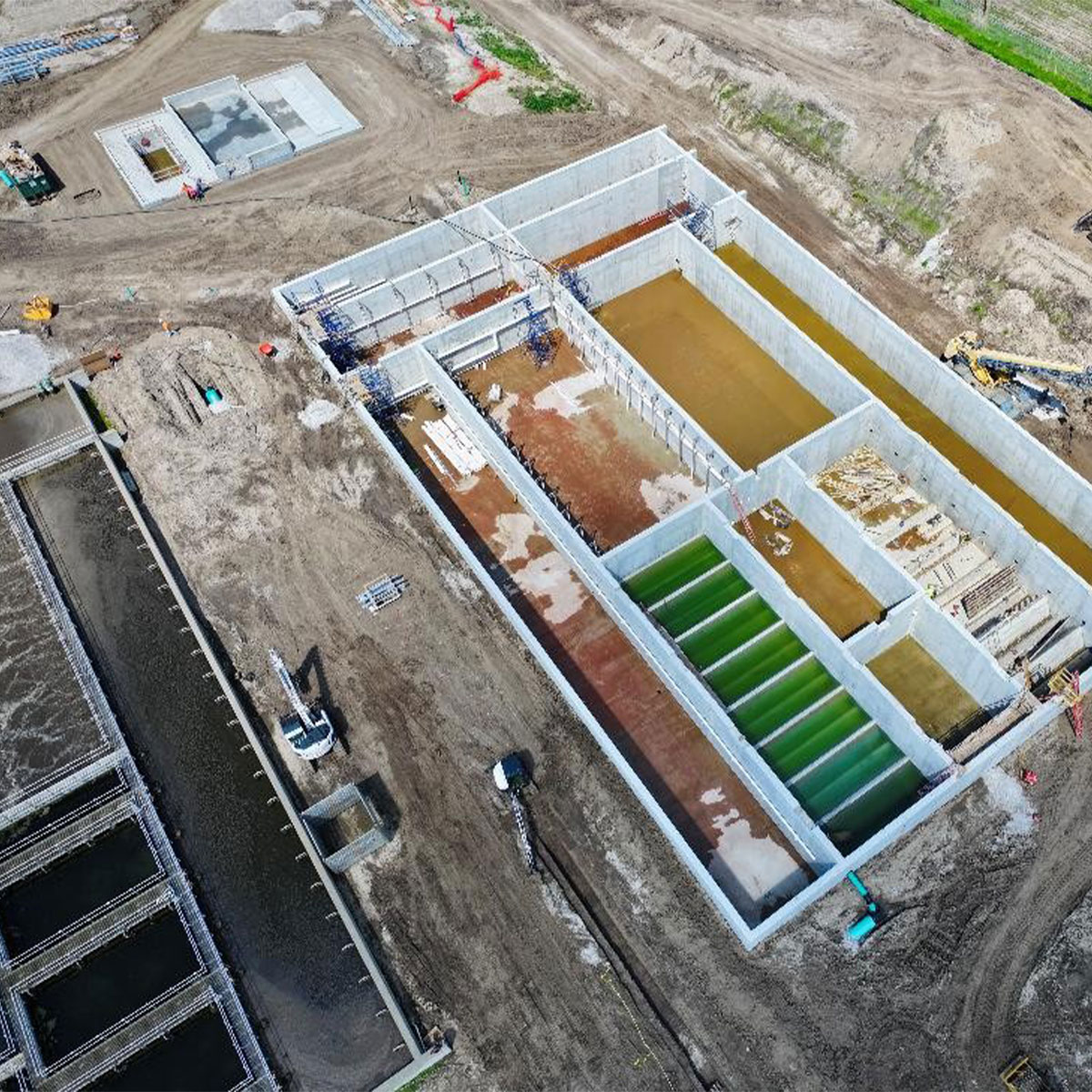
The small midwestern town of DeSoto, Kansas, just outside of Kansas City in eastern Kansas, experienced a remarkable transformation in the mid 2020’s, driven by rapid industrial and residential growth with the opening of a new Panasonic battery manufacturing plant in 2025. This evolution directly impacted the community’s infrastructure, and first and foremost was the wastewater treatment plant (WWTP). Requiring an expansion and modernization project, town leaders determined that they not only needed to address immediate capacity concerns, but they also needed to position the town for sustainable growth.
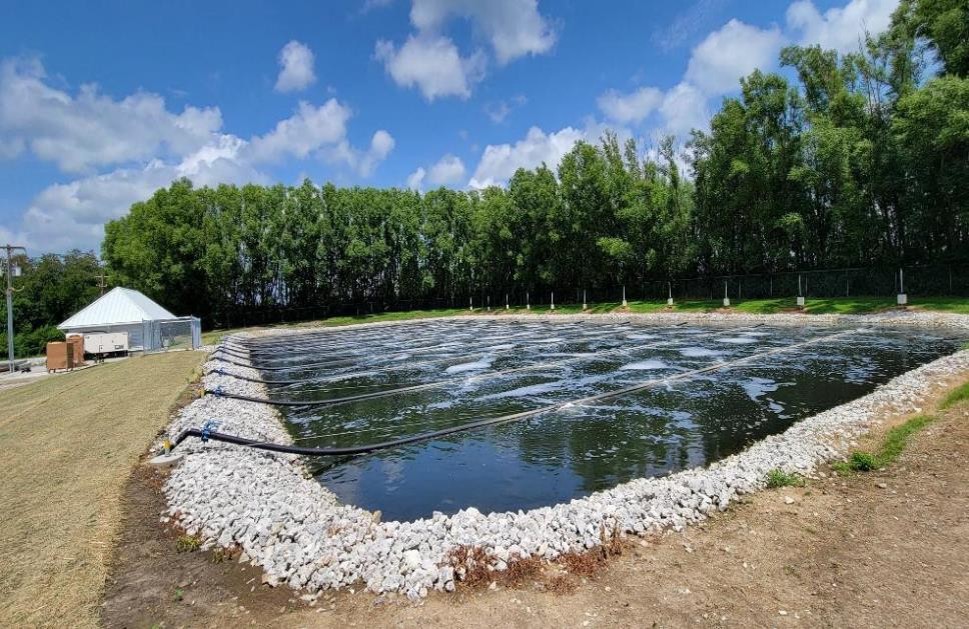
Initially commissioned in 2008 to serve a population of roughly 6,000, the original WWTP relied on technology from Aero-Mod, an Axius Water company, known for its operational simplicity and efficiency. When Panasonic announced plans for their new facility in DeSoto, the town realized it would face a sudden and significant increase in both population projections and industrial flows to their WWTP. This catalyst set in motion a multi-stakeholder effort to redesign and expand the WWTP, using the latest advancements in wastewater treatment and biological nutrient removal.
Bigger and Better
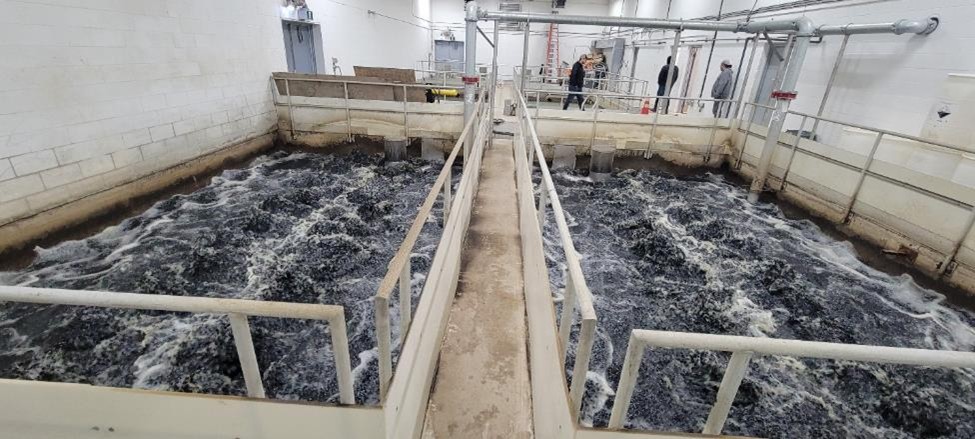
The scope of the expansion was substantial, encompassing all major components within the plant. While certain systems—such as the chemical feed equipment and headworks screening—were not part of the contract assigned to Aero-Mod, the remainder of the facility required a comprehensive overhaul. This included new blowers, advanced controls, and the integration of enhanced treatment technologies capable of meeting the current regulatory requirements.
The original plant had been designed primarily to meet standards related to biochemical oxygen demand (BOD) and ammonia removal. However, updated regulatory requirements from the Kansas Department of Health and Environment (KDHE) necessitated a shift toward full biological nutrient removal (BNR), to minimize nutrient pollution downstream. The core strategy for the upgrade, to accommodate the increased flows (in addition to addressing new regulations), was to mirror the original Aero-Mod plant, effectively doubling treatment capacity. This strategy also allowed DeSoto to simultaneously prepare the original part of the facility for modernization and integration into a more sophisticated, interconnected system.
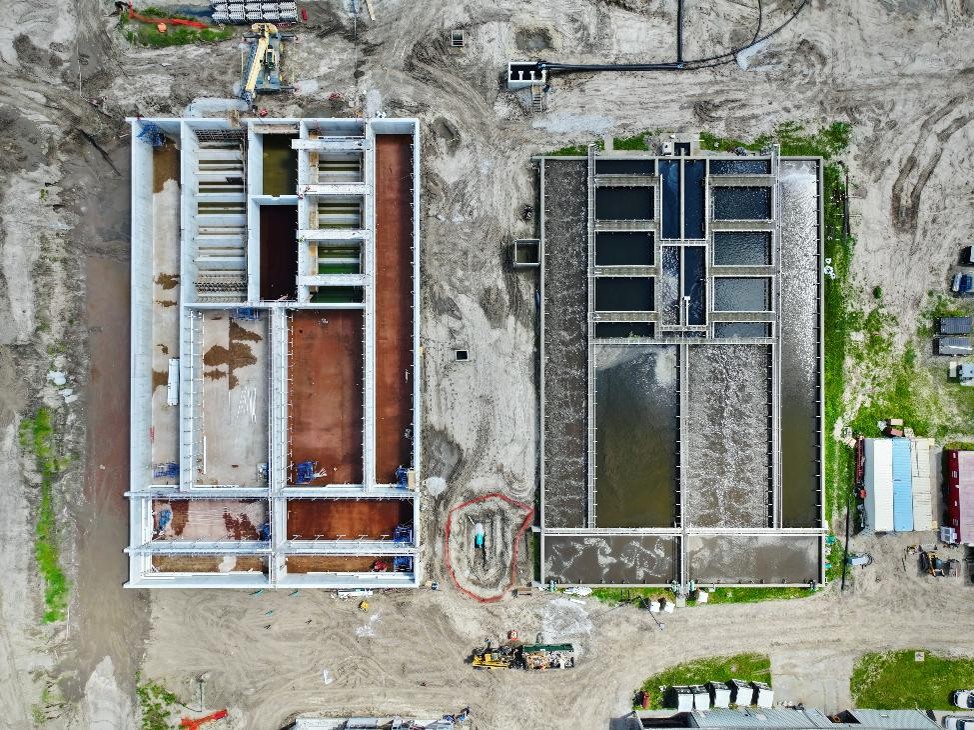
Progressive design-build at its best
Although much of the industrial contribution from the new Panasonic plant consisted of cooling water with relatively low organic loading, the sheer volume demanded increased hydraulic capacity. Furthermore, the town needed to anticipate the arrival of future industrial clients, with potentially different influent characteristics. It was a multifaceted project that needed a unique approach.
To meet these complex variables, DeSoto decided on and embraced a progressive design-build approach, led by Burns & McDonnell as the engineering firm and CAS Constructors as the primary contractor, with Aero-Mod supplying the core treatment technology. Unlike traditional design-build or low-bid procurement methods, the progressive model emphasized transparency, collaboration, and flexibility throughout the project. This approach allowed for ongoing design development, open communication between stakeholders, and iterative decision-making. As a result, the project was delivered within the very tight timeframe, within budget, and with an unusually smooth execution compared to similar infrastructure undertakings. The cooperative atmosphere among the engineering, construction, and technology partners proved to be one of the greatest strengths of the project. Burns & McDonnell, CAS Constructors, town managers, and Aero-Mod worked closely at every stage to refine technical requirements, incorporate operator feedback, and ensure alignment with long-term community goals.
Set it and forget it
One of the defining characteristics of the Aero-Mod technology—and a primary reason it was selected for the expansion—is its balanced combination of automation and operational simplicity. The system is designed for continuous flow, allowing for highly automated treatment with minimal operator intervention. This model is particularly well suited for rural and semi-rural communities like DeSoto, where staffing resources are limited. The upgraded facility now operates efficiently with just one full-time operator who spends roughly 10 to 15 hours per week overseeing plant performance, supported by a part-time assistant. Compared to many larger, more complex facilities that require constant supervision and significant technical oversight, Aero-Mod’s “set it and forget it” design offers a compelling advantage.
Operators of the original DeSoto plant, familiar with the Aero-Mod system, have consistently expressed confidence in its reliability and user-friendly nature. Doug Smith, the Wastewater Supervisor in DeSoto, exemplifies this sentiment. Having worked with Aero-Mod technology since 2008, he notes that the system is dependable, self-regulating, and requires comparatively little maintenance and monitoring. His perspective underscores the practical benefits that the technology provides for communities managing limited staffing and constrained resources.
Looking to the future
The upgraded facility incorporated denitrification and biological phosphorus removal, supported by new sensors, automated controls, and real-time monitoring systems. These enhancements enable the plant to comply with stricter phosphorus and nutrient limits – standards that are expected to tighten even further as the community continues to grow. With the current permit requiring a rolling mass load average for phosphorus, future expansions may demand even greater nutrient removal efficiency.
Looking ahead, DeSoto is already preparing for the next wave of industrial and commercial growth. Ongoing discussions with town leaders and project partners point toward the likelihood of another future expansion of the WWTP, to address new wastewater challenges and increases in overall demand. At the same time, the upgraded facility has performed beyond expectations, reducing the need for supplemental carbon additions thanks to the influent characteristics and optimized biological processes.
Ultimately, the DeSoto wastewater treatment plant expansion stands as an example of how progressive design-build – facilitating thoughtful planning, advanced technology, and strong collaborative partnerships – can enable growing communities to meet both present and future needs, efficiently and effectively. By combining cutting-edge BNR capabilities with simple, operator-friendly design, the upgraded plant supports economic expansion while safeguarding environmental quality. As DeSoto continues to attract new businesses and residents, the WWTPs enhanced capacity and adaptability ensure that the town is well prepared for whatever comes next.
End note: The success of the progressive design-build collaboration not only strengthened the relationship between Aero-Mod and Burns & McDonnell, but also led to additional contract opportunities, further solidifying Aero-Mod’s reputation as a preferred partner for future water and wastewater projects. This case study also appears in a February 3, 2026 blog post of the WCDA (Water Collaborative Delivery Association): https://watercollaborativedelivery.org/when-knowing-what-you-want-isnt-enough-how-progressive-design-build-enabled-early-validation-and-faster-delivery/