Success Stories
Small town wastewater lagoon makes big time gains in ammonia removal
SAGR reduces cost and land use but optimizes efficiency


In the heart of the upper midwestern plains of the United States sits Blue Grass, Iowa, a small rural community on the outskirts of Davenport and about 150 miles east of Des Moines. With a population of about 1,700 people per the 2020 census, Blue Grass is situated about three miles north of a strong westward flow of the Mississippi River.
Rural communities, where lagoons rule
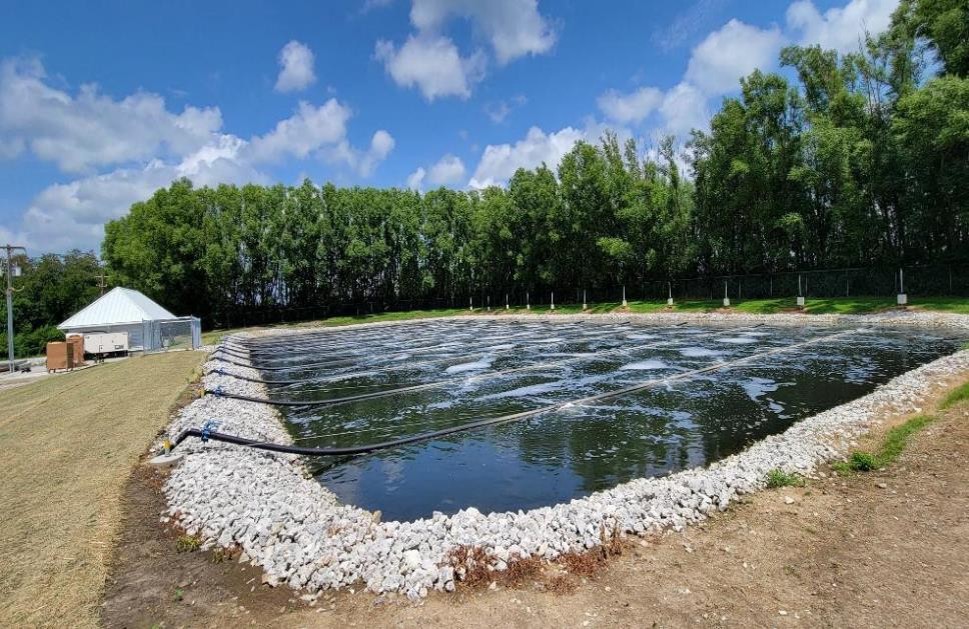
As with many smaller towns across North America and around the globe, the wastewater treatment facility in Blue Grass is not a concrete mechanical wastewater treatment plant typical of those found in urban settings, but a lagoon-based system consisting of large open-air ponds situated on the outskirts of town. In Iowa alone, there are over 700 lagoon-based water resource recovery facilities (WRRF).
Originally commissioned decades ago, the Blue Grass lagoon is typical of most lagoon systems – designed and built for “simple” BOD and TSS removal – but not able to address the tighter ammonia and total nitrogen limits imposed in recent years. This is a particular challenge in colder climates, including the upper Midwest, where water temperatures can drop below 5°C/41°F during the winter months. With increasingly strict wastewater discharge regulations targeting effluent ammonia over the past 20 years, many municipalities and industrial facilities have been unable to meet the new standards, with many falling out of compliance, in need of upgrades to address the new regulations. Such was the case with the lagoon-based WRRF in Blue Grass.
Changing hands; making improvements
In 2016, in addition to facing compliance issues with their WRRF, the town of Blue Grass was also grappling with how to better manage their water system, which also required upgrades to address the needs of the growing population. The town decided to sell their water system, and in 2017 the Iowa Utilities Board approved the acquisition by Iowa American Water, the largest regulated water utility in the state, providing water and wastewater services to approximately 227,000. The company is a subsidiary of American Water, the largest regulated water and wastewater utility company in the United States. In March 2022, after having a few years under their belt with Iowa American Water owning, operating, and investing in their water system, the town of Blue Grass decided to sell their wastewater system as well, with the Iowa Utilities Board approving the sale to the company for $2 million.
After finalizing the purchase of the Blue Grass WRRF, Iowa American Water consulted with the Moline, IL office of Crawford, Murphy & Tilly (CMT), an infrastructure consulting engineering firm in the Midwest. In addition to some necessary upgrades and improvements with the wastewater system, most importantly Iowa American Water needed to get Blue Grass back into compliance with current Iowa Department of Natural Resources (IDNR) regulations for the lagoons.
Back to the drawing board
During initial designs of the upgrades done by Nexom, an Axius Water Company, it was determined that the existing lagoon system did not meet the current regulations from 2023. As a result, an alternative innovative design was proposed, with a different type of aeration in the first cell of the lagoon – a complete mix aeration typically used in other regions of North America but not common or previously approved in Iowa – instead of the partial mix aeration normally used. This design, which still included the stabilization pond as part of the process, increased the rate of treatment in the existing basin volume. When presented to the IDNR for review, with submerged attached growth reactor (SAGR) post-lagoon nitrification to address ammonia, the new plan was approved, and the design was finalized with these modifications to the lagoons.
However, when contractor bids were received in the fall of 2024, their pricing reflected elevated market and material costs that exceeded the project budget.
Going back to the drawing board, the team came up with a design to decrease costs but still address regulatory guidelines. During the time when the project was out for bid, Nexom had been working on a revised SAGR design that would reduce the cost and the overall footprint of the project. The revised design parameters had already been shared with IDNR for consideration across the state, but the guidelines were still under review. Nexom pitched the revised SAGR design as a potential way to decrease the overall cost of the project and bring it back within budget – pending approval by IDNR. As it turned out, the resulting redesign would provide significant savings and meet guidelines. While the revised design had not yet been approved for use in Iowa, the team was optimistic as they submitted the plans to IDNR for consideration, looking at the overall regulation for lagoons.

New data; new solutions
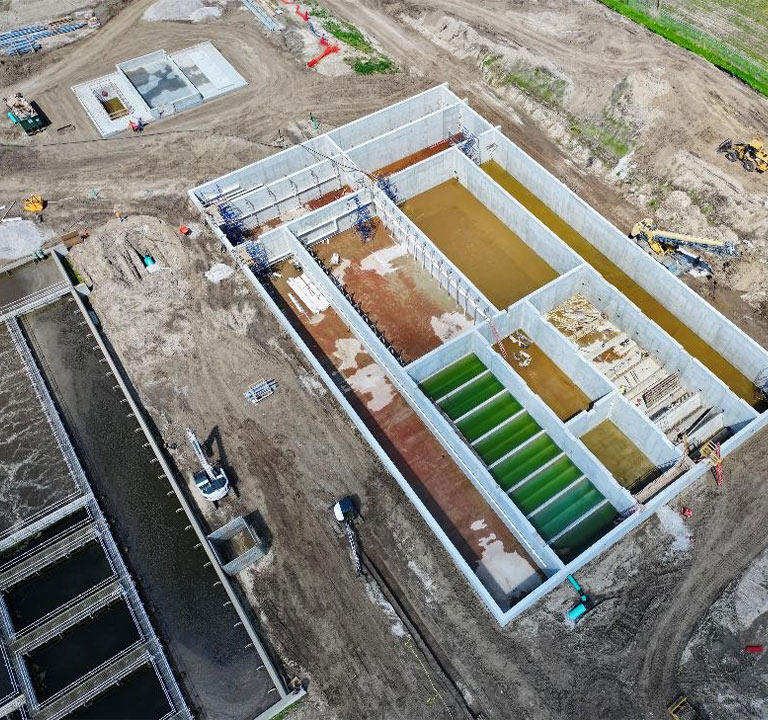
The revised SAGR design proposed by Nexom was based on data collected from a demonstration project in Manitoba, Canada. The SAGR has always proved effective – even in colder climates – in addressing ammonia (and accomplishing even lower TSS and BOD) for lagoon applications, polishing secondary wastewater effluent following an aerated lagoon system. Initial SAGR design guidelines by IDNR and other regulatory bodies were based on early SAGR demonstration data, and therefore required them to be overbuilt and larger than necessary, to help ensure effectiveness. But as Nexom continued to explore opportunities for improvement, testing data showed that discharge requirements could be accomplished even with reduced sizing. When looking at the Blue Grass facility and the SAGR design specifically, Nexom, Iowa American Water, and CMT worked with the contractor with the lowest bid to value engineer a solution based on optimizing their proposal. What the team came up with was to take the four larger cells of the original design (based on original regulatory standards) and utilize only two basins, accomplishing discharge numbers that met guidelines and realized a reduction in overall land use of over 50%. The smaller land area meant tremendous savings in rock and material costs. The biggest hurdle now was getting approvals from IDNR, as the smaller size wasn’t yet part of the guidelines.
The team asked the IDNR to review the new designs, based on the test results, while also reviewing the overall lagoon guidelines, to consider changes to both SAGR and lagoon guidelines based on the presented data.

All systems go
Once IDNR reviewed the Blue Grass redesign with the smaller SAGR system and the test data was provided by the Blue Grass team, they provided their stamp of approval on the Blue Grass system. Shortly after approving the Blue Grass project, IDNR gave a general stamp of approval of the revised guidelines recommended by Nexom to be used in reviewing the SAGR for upgrading other lagoons across the state. With the approval of the smaller SAGR and the revised engineering specs of the lagoon system, these design guidelines could transform how the rest of Iowa’s lagoon facilities treat ammonia, while providing a roadmap for the thousands of other lagoon systems across the US. In March of 2025, with the approval from IDNR, Iowa American Water and the team immediately set out to build the SAGR with the redesign and to modify the existing lagoon system.
How a SAGR works
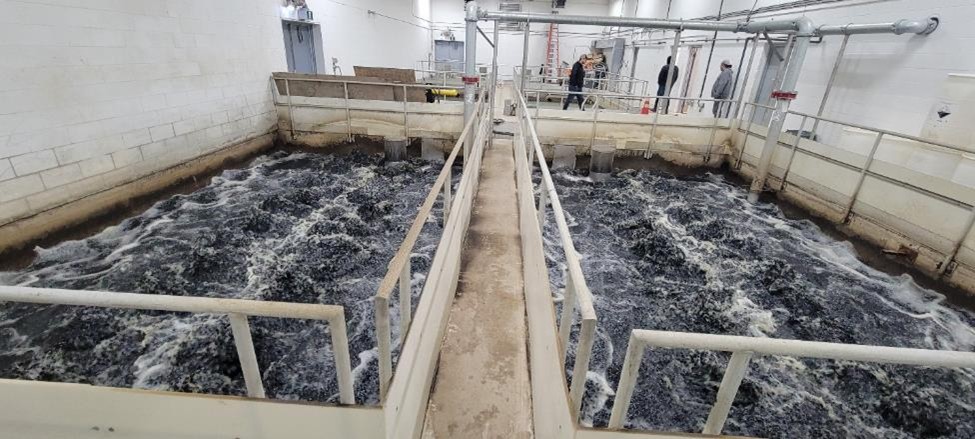
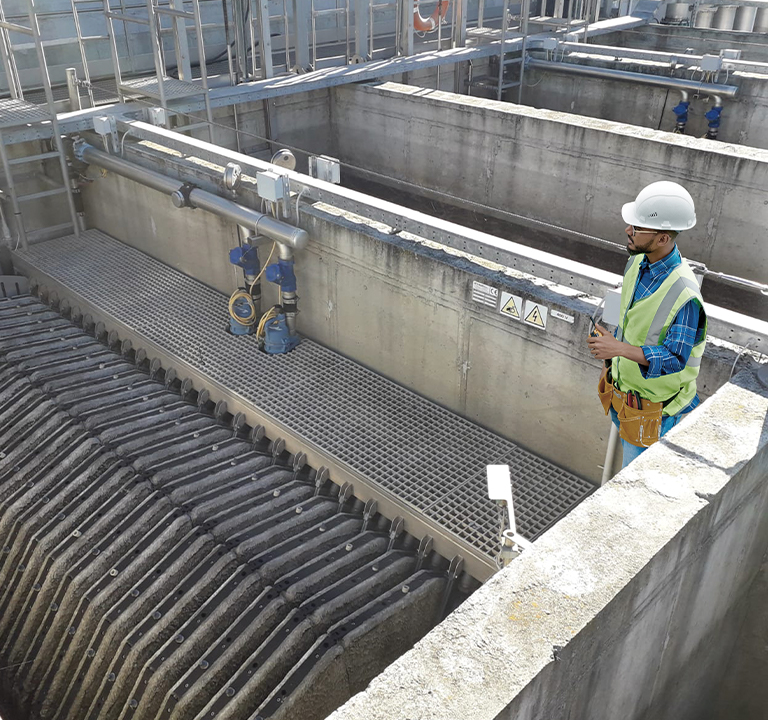
The SAGR is designed to be post-lagoon, in which lagoon effluent flows through clean aggregate media. Using linear aeration across the floor of the bed, the SAGR maintains high dissolved oxygen (DO) conditions throughout, while (in a typical configuration) water flows horizontally from influent distribution and effluent collection chambers that prevent short-circuiting within the bed. Thanks to an environment optimized for internal digestion, a SAGR has no significant build-up of solids. Systems in operation after 15 years continue to have unconstrained hydraulic conductivity, and sludge accumulation models suggest, under design conditions, it will not foul within 40-60 years of installation.

Nutrient removal and savings – a win-win
The new SAGR design standards in Iowa typically provide for a 35-65% reduction in size for SAGR systems. In the case of Blue Grass, they were able to cut the square footage of their SAGR area in half, providing a 50% reduction in rock and material costs.
Even before the reduction in size and costs, a lagoon-based WRRF with a SAGR post-lagoon to address ammonia and nutrient removal in wastewater, when compared to the cost of a full-scale mechanical plant, can be significantly less expensive, especially when they can re-use existing lagoon infrastructure. And that’s before the consideration of the labor costs to maintain a mechanical plant versus maintaining a lagoon and SAGR system. So, the added bonus of size and cost reduction makes an economical solution that much more economical.
Final construction on the Blue Grass WRRF was completed in June 2025, and the facility was commissioned in July – one of the first SAGR systems to utilize the revised smaller sizing criteria. With the lagoon redesign and the SAGR in place for polishing effluent to address ammonia, BOD, and TSS effluent standards, it’s a win-win solution that Iowa American Water can be proud of, meeting permit requirements on an infrastructure investment project that will serve the people of Blue Grass well for years to come.
Merle Kroeker is the Director of Applications Engineering at Nexom, an Axius Water company, based in Winnipeg, Manitoba, Canada.
This case study also appeared in the January, 2026 issue of WE&T magazine: https://www.waterenvironmenttechnology-digital.com/waterenvironmenttechnology/january_2026/MobilePagedArticle.action?articleId=2103250&app=false&cmsId=4313298#articleId2103250