How growing water and wastewater needs can strengthen local infrastructure
Turning Data Center Water Demand Into Opportunity



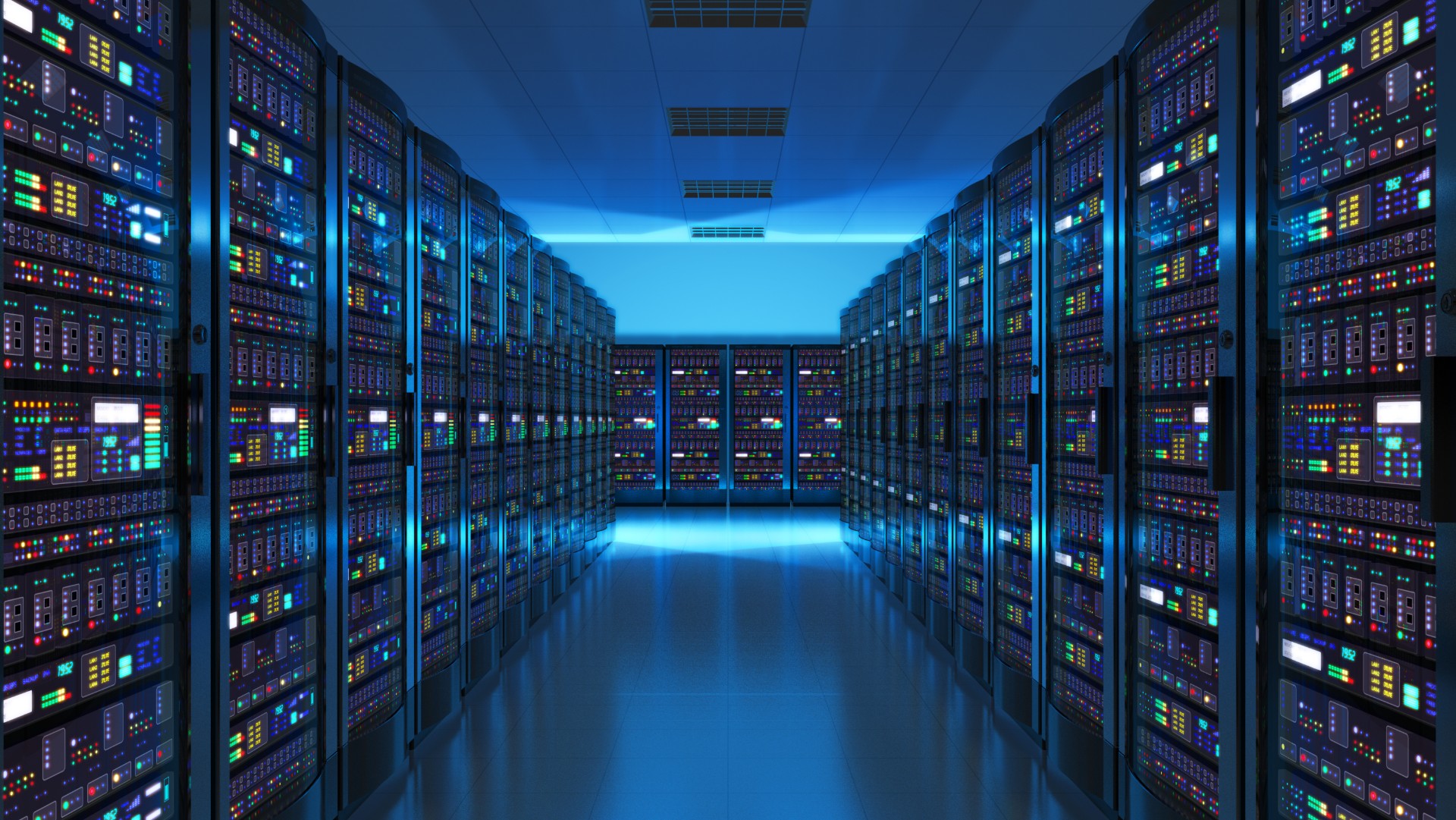
Data center development across the globe has increased exponentially in the past 10 years, and nowhere is it more prevalent than in the rural stretches of North America. With the increase in AI in the coming years, demand for data centers will continue to grow (According to McKinsey & Company, data center demand could more than triple by 2030). Accompanying these advances has been mounting questions regarding the water consumption of these large scale developments. Data Centers require high volumes of water to operate, however strategic water resource management and careful planning can provide innovative solutions to what many think is problematic. As with most initiatives, the difference is in the planning stages: data centers that align themselves in the pre-planning stages with a sustainable frame work such as energy efficient treatment systems and/or water reuse applications provide solutions to many data center challenges.
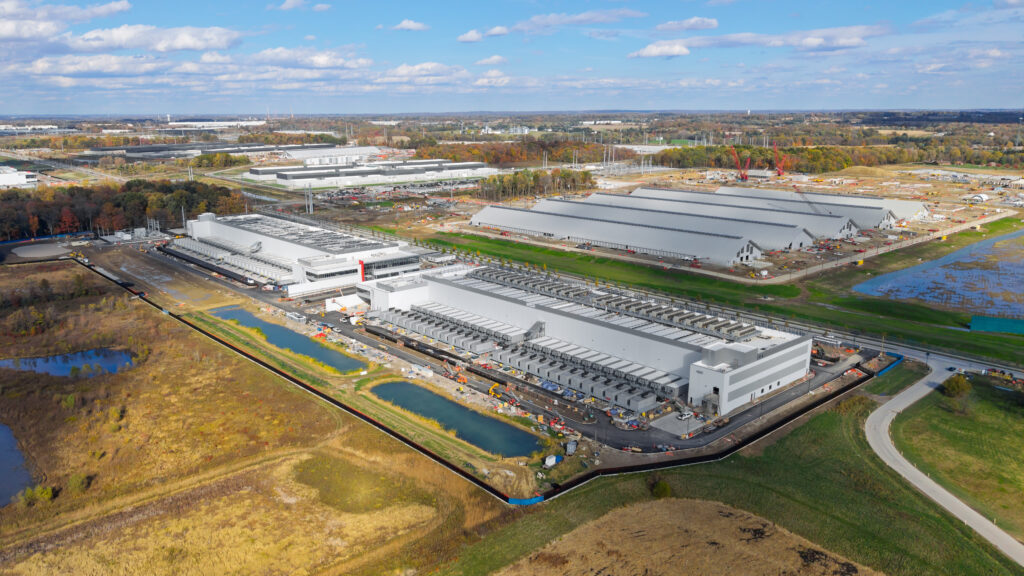
Data centers are typically situated in rural areas, where land, water, and energy resources are plentiful. The development of these facilities provide the opportunity for economic growth and the ability to bring reliable water treatment systems to neighboring communities. By partnering with neighboring communities, data centers can gain resource allocations for high efficiency water systems and water reuse applications. Many of these approaches can benefit nearby municipal plants, providing much needed investments in critical water infrastructure.
Building The Foundations For Water Resilience
Key to the discussion around data centers is the water consumption necessary to cool the equipment and the facility itself. Typical data center cooling towers can use 300,000-400,000 gallons of water per day, and a hyperscale AI driven data center can gulp down upwards of 5 million gallons per day – as much as a town of 50,000 people. Given this intensive water consumption, water reuse and water conservation efforts are critical.
Process water for data center cooling systems can come from several different sources and heavily relies on geographic location. Some data centers use brackish seawater, some opt for groundwater, and others use nearby lakes and rivers. The most important part is that energy efficient and high recovery systems such as Reverse Osmosis (RO) are selected for proper treatment. Selecting the correct technology ensures that every drop of water is used to its fullest extent, while reducing energy demands needed for water cooling systems.
The other side of the consumption issue is the capacity to handle the increase in flow to the community’s wastewater treatment plant (WWTP). The treated water from RO systems also known as the permeate is cycled through data center cooling systems several times before it is discharged to the nearby WWTP. RO treatment also generates reject streams known as RO concentrate that are high in Total Dissolved Solids (TDS), Nutrients, and Algae that are also discharged to the nearby WWTP. The increased flow patterns to neighboring WWTP’s provides an opportunity to expand and modernize facilities to meet new peak flow demands. In doing so municipal facilities can invest in processes that can meet stringent discharge limits that they may have otherwise struggled with.
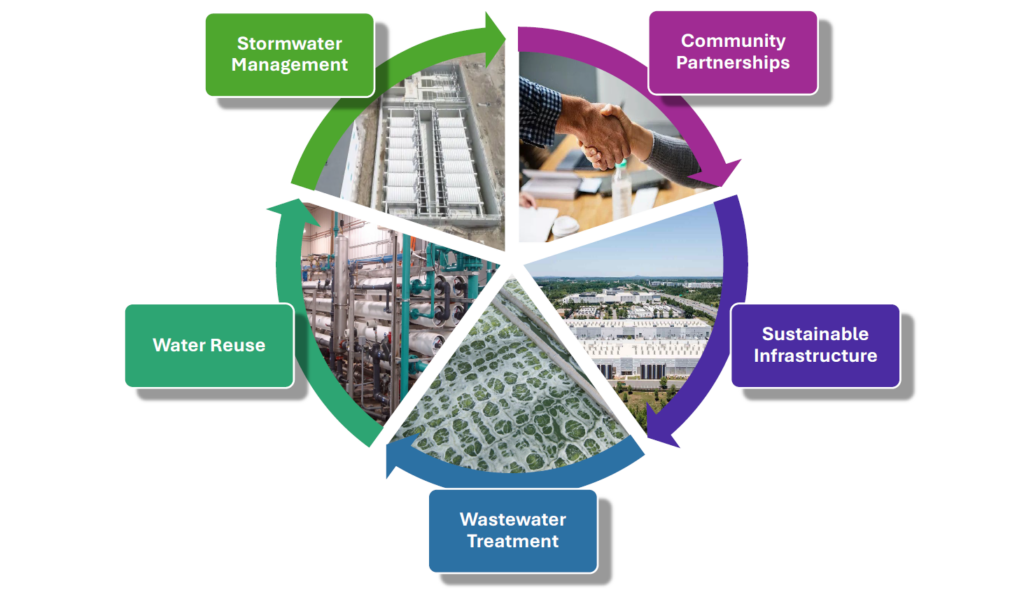
A unique opportunity also presents itself with modernized and advanced treatment systems that can be applied at WWTP’s that is safe for non-potable reuse and even used as source water for data centers. Partnerships between data centers and municipal facilities can benefit communities through dual intent treatment. With proper planning, data centers can provide investments into communities that positively impact the regions water consumption and wastewater processes.
Data centers have also started implementing stormwater catchment systems to harvest water for cooling system processes. Rainwater is typically stored in detention systems that capture water and slowly dissipates its release into the environment over a period of time to prevent flooding. By converting to retention systems, data centers are able to retain stormwater run-off and reuse it for cooling process water. The technologies for grit, screening, and process treatment are readily available to harvest storm water at data center locations around the world.
Partner With The Professionals
Axius Water can assist hyper-scalers with water treatment strategies that can improve the environment for generations to come. Partnering with a company like Axius Water can help to ease the burden – and make the transition to a more sustainable water future. Regardless of what the challenges are, whether it’s source water process treatment, nutrient pollution, handling the increased flow to their wastewater treatment plant, or even just learning the ins and outs of data center water use, it’s critical for municipalities to gain an understanding of what’s best for their communities. Axius Water is well positioned to help communities understand the challenges and provide solutions that benefit continued economic growth.